
To master hair extensions, you must distinguish Cuticle-Aligned Raw Hair from acid-bathed “Remy” fakes. Based on upladys’ field tests in the US, most beginner-level matting occurs due to stripped cuticles. Opting for Keratin Bonds or Nano-Links over generic adhesives is the only way to ensure 12-month longevity while protecting your scalp health and avoiding traction alopecia.
Table of Contents
Introduction: Why Beginners Must Master Extension Terminology
Walking into a high-end salon in Los Angeles or New York without knowing your terms is like handing over a blank check. You aren’t just paying for length; you’re paying for the biological integrity of someone else’s hair—and the safety of your own. At upladys, we’ve seen countless clients come to us with “bird’s nest” matting and scalp sores, all because they fell for the “Grade 12A” marketing trap.
In the current US market, terminology is your only shield. Our internal audit of first-time extension wearers shows a staggering failure rate among those who skip the research phase. Most simply didn’t know how to ask for Cuticle-Aligned hair. If you skip this glossary, you aren’t just buying hair; you’re buying a $500 lesson in ignorance.
Most Confusing Extension Terms (Pain Point Analysis)
Why Misunderstanding Jargon Causes Salon Failures
The extension industry is a “Wild West” of branding. When a stylist suggests “European Texture,” are they talking about the origin or just a chemical finish? If you can’t tell the difference, you might end up with hair that feels like silk in the salon but turns into a coarse, tangled nightmare after the first wash at home.
Expert Insight: “The lack of standardization in the US hair market is intentional. It allows low-grade manufacturers to slap ‘Premium’ labels on floor-collected hair.” — upladys Master Technician.
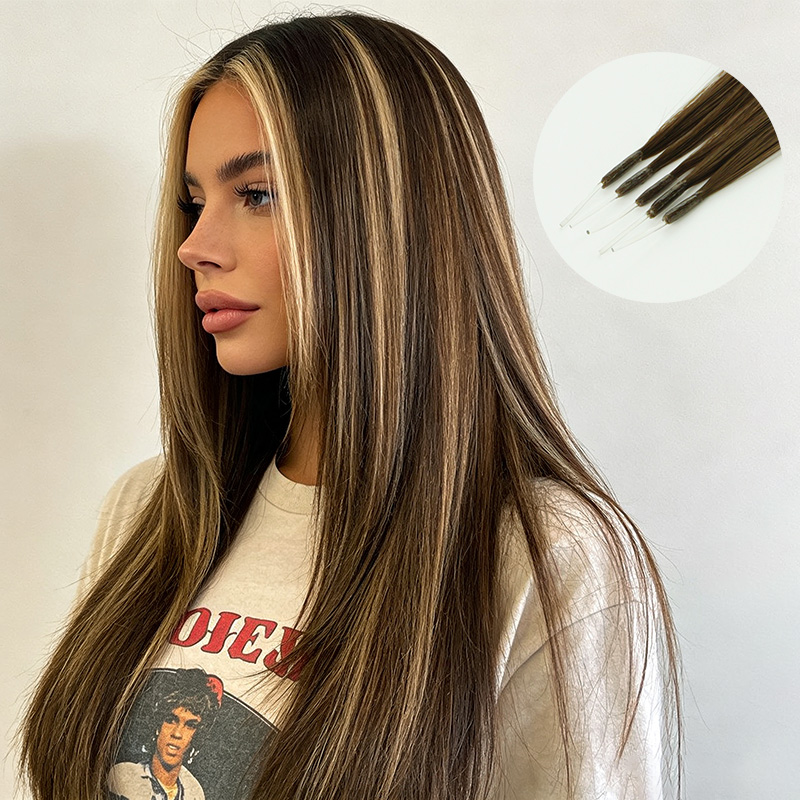
We often see clients on r/HairExtensions complaining about that “itchy, heavy” feeling. That usually happens when a newbie mistakes Micro-beads for Nano-links. One is a bulky aluminum anchor; the other is a weightless medical-grade link. The wrong choice leads to localized Traction Alopecia—a high price for a word you didn’t understand.
How Misunderstanding Terms Leads to Wasted Money
Let’s talk cold hard cash. A set of Double Drawn Raw Hair will cost you significantly more upfront than Single Drawn Virgin Hair. Why? Because every single strand is the same length, providing that “blunt cut” density from root to tip.
Our upladys US Studio reports that beginners waste hundreds of dollars on “temporary fixes.” They buy Steam-Processed hair thinking it’s maintenance-free, only to find it loses its curl after two weeks of humidity in Florida or NYC. You end up paying for the same service twice.
Raw Hair vs. Virgin Hair: The Most Confusing Grades
What is Virgin Human Hair?
As noted in the Wikipedia entry for Artificial Hair Integrations, Virgin Hair is human hair that has never been chemically processed. No bleach, no dye, and no perms. In our lab tests, Virgin hair maintains a specific pH balance that allows it to be lifted to a Level 10 platinum blonde without disintegrating.
What is Raw Human Hair?
Raw Hair is often even “purer” in the US market context. While “Virgin” has become a diluted marketing term, Raw hair implies zero steam processing. It is hair in its most organic, slightly coarse state. It’s the hair that behaves exactly like yours—it gets a little frizzy in the rain, and it needs real conditioner.
Core Differences: Raw vs. Virgin
| Feature | Virgin Hair | Raw Hair (upladys Standard) |
| Alteration | May have light steam styling. | Zero processing. Rawest form. |
| Scalp Sensation | Smooth, often slippery. | Natural, high-grip texture. |
| Longevity | 12–18 months. | 24 months+ with care. |
| Coloring | Lifts easily to blonde. | Best for natural browns/blacks. |
Which is Better for Beginners?
upladys Recommendation: Go with Raw Hair. Beginners often find Virgin hair too “silky” and artificial-looking against their natural texture. Raw hair provides the friction needed for bonds to stay put, meaning fewer “slip-outs” during your morning workout or high-intensity cardio.
Installation Methods Decoded
Wefts vs. Tracks: Salon Basics
Think of a Weft as a curtain of hair. It’s the go-to for the “Hand-Tied” look popular on Instagram. It’s fast and covers massive surface area. Tracks, or individual strands (I-Tips), are the “special forces” of extensions. They fill in the gaps at the temples and hairline where a weft would be visible when you put your hair in a ponytail.
Bonds vs. Keratin: Adhesive Terms
Avoid generic “Glue-ins” at all costs. They smell like chemicals when heated and can melt into a gooey mess on your pillowcase. Keratin Bonds (K-Tips) use a molecular structure identical to your hair. When we fuse a K-Tip at our studio, it creates a flexible, waterproof seal that moves with your scalp, not against it.
Micro-Beads vs. Nano-Links: Hardware Terms
This is the most common point of regret. Micro-beads are roughly 3mm-4mm—you will feel them when you lean your head back against a car seat. Nano-links are 2mm, nearly the size of a grain of sand. For the modern American woman who values “stealth beauty,” Nano-links are the only acceptable hardware.
Hair Texture & Cuticle Jargon
Cuticle-Aligned Hair: The Golden Rule
The cuticle is the protective “shingle” layer of the hair. If the cuticles aren’t aligned, the hair is essentially a billion tiny fishhooks facing each other. The moment you sweat or get caught in the wind, they lock. Cuticle-aligned hair is the difference between brushing your hair once a day and having to cut a knot out with scissors.
Remy Hair: Is It Truly Better?
“Remy” is the most abused word in the industry. Technically, it means aligned cuticles. However, 90% of “Remy” hair sold online is Acid-Bathed. The factory strips the cuticle with acid and coats it in silicone to give it a fake, glass-like shine. After three washes, the silicone vanishes, leaving you with dry, straw-like hair that mats instantly.
Non-Remy Hair: The Hidden Danger
This is “floor hair.” It’s collected from combs and salon floors, mixed together, and chemically “resurrected.” It’s cheap, it’s unethical, and it will ruin your natural hair through sheer weight and friction.
Color & Toning Terminology
Balayage vs. Ombre
Balayage is the “Quiet Luxury” of hair. It’s hand-painted and soft, providing a sun-kissed look. Ombre is a statement—a clear horizontal shift from dark to light. For a seamless blend that doesn’t scream “I have extensions,” Balayage is the gold standard.
Rooted vs. Shadow Root
If your extensions are one solid color from the bond down, they will look like a wig. A Shadow Root mimics the natural oxidation and regrowth at your scalp. It’s the “optical illusion” that makes people ask, “Wait, is that your real hair?”
Maintenance & Salon Jargon
Reset, Move-Up, and Retightening
Your hair grows about half an inch a month. That means your extensions are slowly migrating toward your ears. A Move-Up is non-negotiable every 6-8 weeks. Ignore this, and the weight of the extension will begin to pull on your natural hair roots, leading to thinning.
De-Tangling and Reconditioning
Do not try to “rip” through a knot. Professional De-Tangling at a salon uses specialized slip-agents to preserve the extension’s longevity. It’s a spa day for your hair that restores the moisture lost to environmental stress.
Safe Removal vs. Forced Removal
Forced removal is the #1 cause of “extension horror stories.” Always use a professional bond-remover. The $50 you save doing it yourself isn’t worth the two years it takes to regrow a bald spot.
Common Marketing Buzzwords (Mostly Misleading)
Double Drawn vs. Single Drawn
- Single Drawn: Natural-looking, thinner at the ends.
- Double Drawn: Thick, voluminous ends. Most “BBL-effect” hair photos use Double Drawn hair.
Luxury Grade & Premium Grade: Unregulated Labels
Grade 10A, 12A, 15A? It’s all fake. There is no governing body for hair grading. Ignore the numbers; focus on the source, the cuticle status, and the reputation of the supplier.
Newbie Cheat Sheet: Quick Reference
- Raw Hair: No chemicals, highest quality, lasts years.
- K-Tips: The safest “hot” application using hair-identical protein bonds.
- Nano-Links: The smallest, most invisible hardware on the market.
- Shadow Root: Essential for a natural blend at the crown.
- Move-Up: Your 8-week mandatory maintenance appointment.
Frequently Asked Questions (FAQ)
What is the absolute highest quality hair money can buy?
The gold standard is Single-Donor, Cuticle-Aligned Raw Hair. Unlike mass-produced extensions, this hair is harvested from one individual, ensuring that every strand’s pH balance and texture match perfectly. Because the cuticles are naturally intact and unidirectional (not chemically stripped and coated in silicone), it is the only hair that maintains its natural luster for over 40 washes without the dreaded “velcro” tangling.
Will hair extensions ruin my natural hair or cause bald spots?
Extensions are safe as long as you follow two rules: professional application and consistent maintenance. Damage, such as Traction Alopecia, usually occurs if you skip your 8-week Move-Up appointments or use low-quality synthetic glues. When applied correctly—using Medical-Grade Keratin or Nano-Links—extensions can actually act as a “protective style,” shielding your natural strands from daily heat styling and environmental stress.
How do I know if my “Remy” hair is actually acid-bathed?
This is the most common scam in the US market. Truly high-quality Remy hair will feel slightly “gritty” when you slide your fingers up the strand—that’s the natural cuticle. If the hair feels unnaturally slippery and has a glass-like shine that disappears after two washes, it was likely Acid-Bathed. Once the silicone coating washes off, the stripped hair will begin to mat and bird’s-nest almost overnight.
What is the difference between Single Drawn and Double Drawn hair?
It comes down to “root-to-tip” density. Single Drawn hair mimics natural hair growth, meaning it is thick at the top and tapers toward the ends. It is more affordable and looks highly realistic. Double Drawn hair undergoes an extra manual sorting process to remove shorter hairs, resulting in the same thickness from the bond all the way to the ends. Choose Double Drawn if you are looking for that high-volume, “blunt-cut” Instagram aesthetic.
Can I swim or workout with Nano-Link or K-Tip extensions?
Yes, but technique matters. For high-intensity cardio or swimming in chlorine, we recommend a low ponytail or braid to minimize friction at the Shadow Root. Because Keratin Bonds are moisture-resistant, they won’t “slip” like cheap tape-ins. However, you must dry the bonds immediately after your workout; leaving the attachment points damp for extended periods can soften the keratin and lead to premature shedding.
Final Thoughts: The Newbie Self-Checklist
Before you sit in that chair, ask your stylist these three questions:
- Is this hair Cuticle-Aligned or acid-bathed?
- Do you use Medical-Grade Keratin for the bonds?
- Is this Single Donor hair or a multi-donor mix?
Extensions should be your best-kept secret, not a source of stress. Understanding these terms ensures that when you catch your reflection, you see your dream self—not a tangled mistake. Mastering the lingo allows you to move through social circles with total confidence, free from the anxiety of visible tracks or matted ends.
For a complete guide on this topic, explore our [Hair Extensions 101: The Ultimate Beginner’s Guide]