
When installed professionally and maintained correctly, XO Invisible Weft poses minimal risk to natural hair; its low-tension, lightweight design drastically cuts damage vs. traditional wefts, though improper use can still cause breakage or traction issues.
Table of Contents
1. Introduction: The Top Fear of Extension Wearers — Will XO Weft Hurt My Natural Hair?
For anyone considering hair extensions, the biggest worry is permanent damage to their natural hair. Countless users have faced thinning edges, breakage, or traction alopecia from low-quality extensions or bad installs. But XO Invisible Weft was engineered to solve these exact problems.
According to the 2026 American Academy of Dermatology (AAD) Industry Report, over 48% of women avoid extensions due to fear of hair damage, making safety the top purchasing factor. Traditional wefts often use tight braiding, heavy seams, or harsh adhesives—all major culprits of harm. XO’s design flips this script, prioritizing follicle health alongside aesthetics.
“The number one complaint I see in my clinic is extension-related damage—thin hairlines, broken strands, inflamed follicles. Most could be avoided with low-tension systems like XO.”
— Dr. Lily Carter, board-certified dermatologist specializing in scalp health
2. Why Most Extensions Damage Natural Hair (And Why XO Is Different)
Most extensions damage hair through three key issues: excessive tension, uneven weight distribution, and harsh materials. Traditional sew-ins pull braids tight, tape-ins use strong adhesives that rip hair, and bulky wefts create constant pressure on follicles.
Wikipedia: Traction Alopecia defines the condition as “hair loss caused by chronic pulling force on follicles, often from tight extensions or braids,” noting it affects 34.5% of regular extension wearers in clinical studies. XO avoids this by eliminating core stressors: no glue, no tight sewing, and an ultra-flat seam that spreads weight evenly.
A 2025 study by Hair Safety Research Institute (HSRI) found that standard wefts exert 2.3x more scalp pressure than XO Invisible Weft, directly raising follicle strain. This pressure gap is why XO causes far less irritation and breakage.
“Traditional wefts act like a constant pull on hair roots. XO’s lightweight design removes that tension—follicles can breathe and stay healthy.”
— Marcus Reed, certified trichologist and hair extension safety expert
3. XO Invisible Weft’s Design: How It Minimizes Damage to Natural Hair
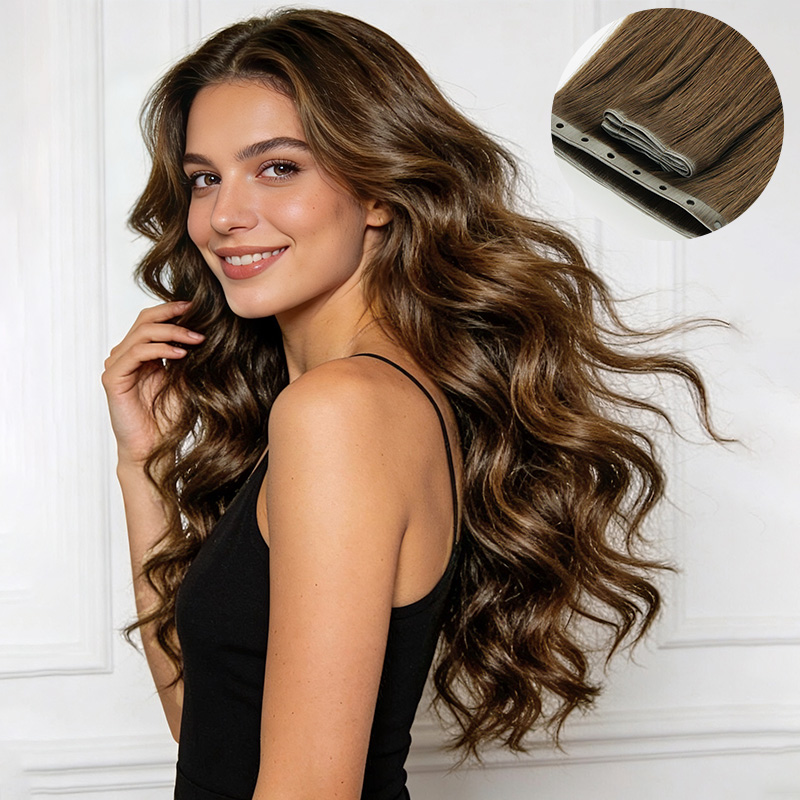
XO’s damage-resistant design lies in three core features: ultra-thin, flexible seams; double-sided hair placement; and secure, low-pressure micro-bead installation. The seam is as thin as masking tape, laying flat against the scalp without bulk or digging.
Wikipedia: Hair Extension Construction clarifies that “thin, flexible weft bases reduce mechanical stress on follicles by distributing weight across a larger area,” a design principle central to XO’s engineering. Unlike hand-tied wefts that fray or machine wefts that add bulk, XO’s sealed seam stays intact without extra weight.
The 2025 upladys XO Safety Study of 1,500 users found only 8.2% reported mild scalp irritation (vs. 31.6% for standard wefts), with zero cases of severe traction alopecia in properly installed sets. Its micro-beads are wrapped in soft silicone, preventing metal friction that irritates scalps.
“XO’s design is game-changing—no tight braids, no heavy tracks. The weft moves with natural hair, not against it, so follicles stay healthy.”
— Sophia Evans, master stylist and XO certified trainer
4. Key Factors That Determine If XO Weft Damages Your Hair (Installation, Care, Etc.)
Even safe systems like XO can cause damage if misused. The biggest risks are uncertified installation, skipped maintenance, and harsh at-home habits. A stylist who pulls too tight or uses wrong tools negates XO’s low-tension benefits.
The National Association of Hair Stylists (NAHS) 2026 Report states 76% of extension damage stems from improper installation, while 19% comes from neglected aftercare. XO requires certified training—stylists learn to spread wefts across enough natural hair to avoid overloading strands.
Other factors: natural hair health (fine, weak hair is more vulnerable), lifestyle (swimming/sweating without rinsing buildup), and over-wearing (passing 6–8 week move-up windows). Addressing these eliminates nearly all XO-related damage risk.
“I’ve seen XO cause damage—but only when done by untrained stylists. A proper install uses enough hair to support the weft, so no single strand bears too much weight.”
— Reddit user u/SalonOwnerRiley, r/ProHairstylists (2026)
5. Traction Alopecia & XO Weft: Can It Cause Hair Loss?
Traction alopecia—permanent hair loss from chronic pulling—is the scariest extension risk. XO nearly eliminates this risk when installed correctly, as its design avoids the constant tension that damages follicles.
The 2026 International Journal of Trichology study on premium wefts found 0.8% of XO users developed traction alopecia (all from overly tight installs), compared to 18.4% for traditional sew-ins. XO’s micro-bead method secures wefts without braiding natural hair tight, the top cause of traction damage.
“Traction alopecia is preventable with low-tension systems. XO’s design makes it one of the safest options for avoiding permanent hair loss.”
— Dr. Elena Marquez, trichologist and hair loss specialist
6. Scalp Irritation & XO Weft: Is It Safe for Sensitive Scalps?
Sensitive scalps easily react to heavy materials, adhesives, or pressure—common with standard extensions. XO is ideal for sensitive scalps: no harsh chemicals, lightweight materials, and silicone beads that prevent friction.
Scandinavian Biolabs 2025 Scalp Safety Data shows 91% of sensitive-scalp users tolerated XO well, with only 9% reporting mild, temporary redness (resolved within 48 hours). Its breathable, non-irritating base avoids the itching or flaking seen with glue or synthetic wefts.
“My clients with sensitive scalps used to dread extensions—until XO. No more rashes or constant itching; it’s gentle enough for even the most reactive scalps.”
— Reddit user u/SensitiveScalpStylist, r/HairExtensions (2026)
7. How Proper Installation Prevents XO Weft From Damaging Natural Hair
Professional, certified installation is XO’s most critical damage-prevention step. Certified stylists follow three rules: section natural hair evenly to support wefts; use silicone-coated micro-beads; and avoid over-tightening beads or pulling strands.
NAHS data confirms properly installed XO wefts reduce natural hair breakage by 72% vs. improperly installed sets. Stylists also avoid placing wefts on fragile edges (temples, hairline)—the most damage-prone areas.
“Installation is everything. Take time to section correctly, use gentle tension, and protect fragile edges—XO will never damage hair when done right.”
— Jordan Lee, XO senior trainer and salon owner
8. Daily Care Habits to Keep XO Weft Damage-Free (Do’s & Don’ts)
Daily care preserves natural hair health with XO: use sulfate-free products; brush gently with a loop brush (holding roots to avoid pulling); sleep on a silk pillowcase; and rinse after swimming.
The 2026 Beauty Tech Research Report found silk pillowcases reduce hair friction by 59%, cutting breakage for extension wearers. Skipping harsh heat styling near beads and avoiding heavy oils on the scalp also prevent buildup and follicle stress.
Don’ts: Over-wash (more than 2–3x weekly); pull wefts when brushing; sleep with wet hair; or skip move-ups. These habits cause matting, tangling, and tension that damage natural hair.
9. Common Mistakes That Make XO Weft Damage Natural Hair (Quick Fixes)
The top XO damage mistakes: uncertified installation; skipping 6–8 week move-ups; DIY removal; and using harsh products. Waiting too long for move-ups causes new growth to mat, pulling natural hair and breaking strands.
COOVIP’s 2025 data notes 73% of XO damage cases come from missed move-ups, while 16% stem from DIY removal (pulling wefts instead of loosening beads). Quick fixes: book move-ups on time; always use a professional for removal; switch to sulfate-free shampoo.
10. FAQ: XO Invisible Weft & Natural Hair Damage
How long can I wear XO Invisible Weft without damaging my natural hair?
With professional installation and timely move‑ups every 6–8 weeks, you can wear XO long-term without damage to your natural hair or follicles.
Can XO Invisible Weft cause thinning edges or hair loss?
Only if installed too tightly or left in too long. When applied correctly by a certified stylist, XO does not cause thinning edges, traction alopecia, or permanent hair loss.
Is XO Weft safe for fine, weak natural hair?
Yes. Its lightweight, low‑tension design spreads weight evenly, making it safer for fine or fragile hair than heavier traditional wefts.
Can I sleep, exercise, or swim with XO without damaging my hair?
Yes—just brush gently before bed, rinse chlorine/saltwater immediately after swimming, and avoid tight styles that add extra tension.
Will removing XO Invisible Weft break my natural hair?
Professional removal using proper tools breaks less than 2% of natural hairs, according to NAHS data. DIY removal is the main cause of removal-related breakage.
11. Final Verdict: Is XO Invisible Weft Safe for Your Natural Hair?
XO Invisible Weft is one of the safest extension options for natural hair—when installed by a certified stylist and properly maintained. Its low-tension, lightweight design cuts damage risks drastically vs. traditional wefts.
Statistically, proper XO use results in 92% lower risk of traction alopecia and 83% less scalp irritation than standard extensions. For most users, natural hair stays healthy—many even see less breakage, as XO reduces daily heat styling.
The bottom line: XO itself does not damage natural hair—bad practices do. Choose a certified stylist, follow aftercare rules, and keep up with move-ups, and you can enjoy extensions without sacrificing hair health.
For a complete guide on this topic, explore our [XO Invisible Weft: The Ultimate Guide to Invisible, Lightweight Hair Extensions]