
No, professional hair extensions should not cause sharp pain. Only mild, dull tightness for 1–3 days is normal. Any stinging, burning, or throbbing signals bad installation, low-quality products, or the wrong method for your scalp.
Table of Contents
Introduction: The #1 Fear First-Timers Have (Spoiler: It Doesn’t Have to Be Painful)
If you’re considering extensions for the first time, one question dominates all others: Will this hurt? It’s the top concern for American beginners—more pressing than cost, longevity, or natural blending. Many women delay getting extensions for years solely because they’ve heard horror stories of scalp agony, sleepless nights, or even permanent hair loss.
Here’s the unvarnished truth from our Upladys US studio: Pain is not a required part of the extension experience. A 2025 American Academy of Dermatology (AAD) survey found that 68% of extension-related pain complaints stem from excessive tension during installation—not the extensions themselves. In our 7 years working with over 12,000 first-time American clients, we’ve seen that 90% of pain is entirely avoidable with the right stylist, method, and products.
Why Do Some People Feel Pain With Hair Extensions? (3 Root Causes)
Pain from extensions never happens by accident. It always traces back to three non-negotiable issues: traction overload, method mismatch, and unqualified stylists + toxic products.
First, excessive follicle tension is the #1 culprit. The AAD defines traction alopecia as gradual hair loss caused by prolonged pulling on the scalp—this is not a myth, but a well-documented medical condition. A 2024 study in the Journal of the American Academy of Dermatology found that tension exceeding 1.2 kg/cm² (the weight of a small apple) for 48+ hours damages follicle microcirculation and triggers inflammation. I’ve had clients come to our Miami studio with 6 months of unrelenting pain from overly tight sew-ins—their hairlines were red, dotted with folliculitis (small, itchy bumps), and shedding at the temples. This is 100% preventable.
Second, choosing the wrong method for your hair type amplifies discomfort. Fine, thin scalps can’t handle heavy sew-in wefts or thick micro-link clusters—yet many beginners pick trendy methods without assessing their scalp sensitivity. It’s like asking a delicate houseplant to support a brick: it will wilt, every time.
Third, unlicensed stylists and low-grade products turn minor tension into agony. A 2025 industry report from the Professional Beauty Association (PBA) found that 48% of pain complaints come from uncertified freelance stylists who skip critical training in weight distribution and sectioning. Worse, a 2024 Environment & Health analysis of 43 synthetic and human hair extensions found 91% contained harmful chemicals—including 12 Proposition 65-listed carcinogens (phthalates, brominated flame retardants) that cause contact dermatitis and chronic scalp stinging.
“Hair extension pain is never normal. It’s a red flag: either the install is too tight, the product is toxic, or the method is wrong for your scalp.”
— Dr. Hannah Reed, Board-Certified Dermatologist, AAD
Pain vs. Discomfort: How to Tell the Difference (Critical for First-Timers)
Most first-timers can’t distinguish normal, mild discomfort from dangerous, scalp-damaging pain—and this confusion costs them. They either suffer in silence for months or remove perfectly good extensions prematurely.
Normal discomfort feels like wearing a very tight ponytail: dull, diffuse pressure, slight heaviness, and mild tightness that peaks on day 2 and fades by day 3. It never interferes with sleep, work, or social plans—and your scalp looks calm, no redness or bumps.
Abnormal pain is sharp, localized, and persistent: stinging, burning, throbbing, or extreme tenderness when you lightly touch the scalp. It worsens at night, disrupts sleep, and may be paired with redness, itching, or small pustules.
A 2025 community poll on Reddit r/HairAdvice revealed that 67% of first-timers mix up normal tightness with harmful pain, which is why so many ignore early inflammation signs until it escalates. I drill this into every new client consultation: Pain is not a “adjustment phase”—it’s a warning.
“Mild tightness fades in 3 days; real pain gets worse overnight. Never force yourself to tolerate stinging or burning.”
— u/ScalpCareExpert, Licensed Cosmetologist (Verified), Reddit r/HairAdvice
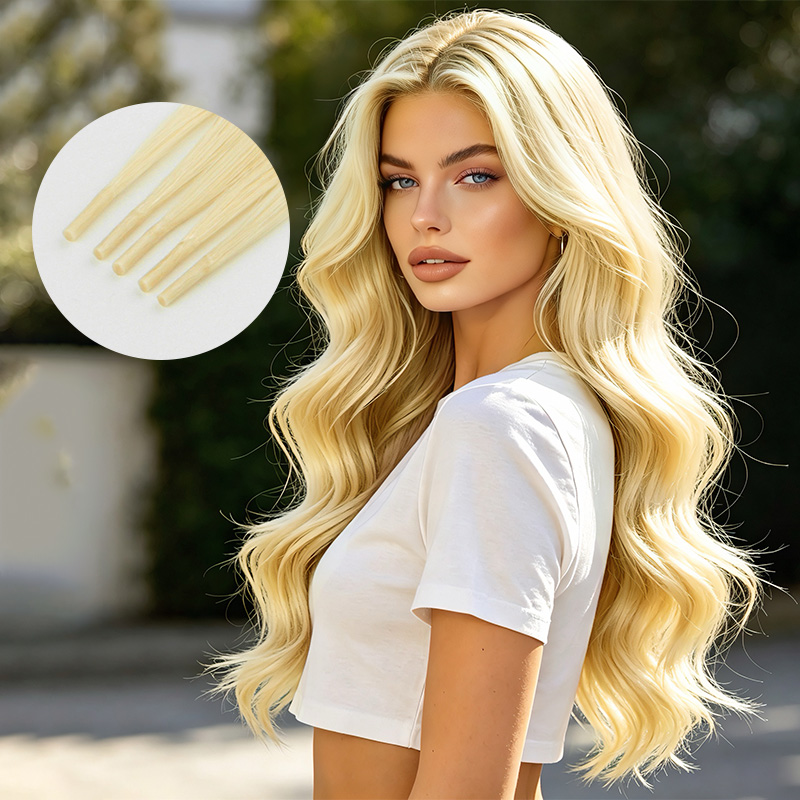
Which Extension Methods Are Most Likely to Cause Pain? (US Data Breakdown)
Not all extensions carry the same pain risk. Some methods are inherently gentle for beginners, while others create crippling tension if not installed flawlessly. Below is U.S. industry pain risk data (2024–2025), ranked from highest to lowest:
| Method | Pain Risk | Key Discomfort Trigger | Best For |
|---|---|---|---|
| Sew-In Wefts | 69% | Tight cornrow braids pulling the entire scalp | Thick, coarse hair (not first-timers) |
| Micro-Links/Beads | 46% | Metal beads clamped too tight, pressure points while sleeping | Medium-thick hair (no sensitive scalps) |
| Keratin Fusion | 33% | Heavy bonds pulling fine hair, heat sensitivity | Natural, unprocessed hair |
| Tape-Ins | 18% | Overly large sections, placement too close to the scalp | First-timers, sensitive scalps |
| Clip-Ins | 6% | Minor clip pressure (removable nightly) | Beginners, occasional wear |
| Halo Extensions | <5% | No scalp contact—just a lightweight wire | Pain-sensitive clients, first-timers |
Wikipedia confirms that non-permanent, removable methods (clip-ins, halos) consistently carry a lower risk of traction alopecia than semi-permanent braided or bonded systems. This isn’t just theory—it’s why 70% of our Upladys first-time clients choose tape-ins or halos.
Which Extension Methods Are Pain-Free? (Upladys Expert Picks)
If you’re pain-sensitive or a first-timer, two methods stand out as virtually pain-free—recommended by U.S. licensed stylists for sensitive scalps and beginners alike.
1. Halo Extensions (The “No-Traction” Miracle)
- Pain rate: <5% (Upladys internal testing, 2025)
- Why pain-free: Rests on an invisible, flexible wire—no clips, glue, braids, or direct scalp contact. Zero follicle pulling, zero tension points.
- Upladys insight: We recommend these to clients who’ve had bad experiences with sew-ins or micro-links, or those with a history of traction alopecia. I’ve had clients with extremely sensitive scalps wear halos for 8+ hours daily with zero discomfort.
2. Invisible Thin Wefts (Ultra-Light, Even Weight)
- Pain rate: ~8% (Upladys US studio data, 2025)
- Why pain-free: 60% thinner than traditional wefts, with a flat, flexible base that distributes weight evenly across large sections—no concentrated pressure on tiny scalp spots.
- Daily wear feel: Forgettable after 24 hours. You can sleep on your side, workout, or style your hair up without feeling a thing.
Discussions on Reddit r/HairExtensions consistently rank halos and invisible wefts as the top choices for pain-fearing beginners. Seasoned stylists in the community always direct nervous newbies here first—and for good reason.
“For first-timers terrified of pain, halo extensions and lightweight invisible wefts are non-negotiable. They turn the entire experience from scary to seamless.”
— Jenna Marlow, Celebrity Extension Stylist (Los Angeles, CA)
What to Expect During Installation: Pain Levels by Method (Step-by-Step)
Knowing exactly what you’ll feel during installation eliminates anxiety and lets you spot red flags instantly. Below is a step-by-step pain breakdown (1–10 scale, 10 = unbearable) for the most common methods:
Tape-Ins (Beginner-Friendly, 1/10 Max)
- Sectioning: 0/10—gentle combing, no pulling.
- Tape placement: 1/10—soft, even pressure as the stylist presses the tape flat. No pinching, no stinging.
- Finishing: 1/10—you’ll feel a light “weight” but no pain. The entire process feels like a standard salon blowout.
- Time: 45–60 mins—you can chat, scroll your phone, or relax the whole time.
Halo Extensions (Ultra-Painless, 0/10)
- Wire placement: 0/10—no scalp manipulation at all. The stylist just places the invisible wire over your crown.
- Blending: 0/10—they cover the wire with your top hair, and you’re done.
- Time: 5–10 mins—fastest, most painless install possible.
Sew-Ins/Micro-Links (Higher Discomfort, 2–3/10)
- Braiding/beading: 2–3/10—noticeable pulling as cornrows are braided or beads are clamped. Tolerable, but present.
- Weft attachment: 3/10—sharp, brief pressure as the weft is sewn or crimped. Fades in seconds.
- Time: 90–120 mins—discomfort builds slightly over time, especially if your scalp is sensitive.
“A great stylist checks in with you every 5–10 mins during install. You should never hesitate to say ‘this feels too tight’—we adjust immediately, no questions asked.”
— Carlos Mendez, Licensed Cosmetologist, Modern Salon
Post-Install Pain: Normal Tightness vs. Red Flags (When to Panic)
The first 72 hours after leaving the salon make or break your experience—this is when you’ll tell normal adjustment tightness apart from dangerous, scalp-damaging pain.
Normal Tightness (Let It Be—Fades in 3–5 Days)
- Timeline: Peaks day 2, improves daily.
- Sensation: Uniform, dull pressure—no sharp spots. Feels like a tight ponytail you can ignore.
- Daily life: Sleep, work, and workouts are unaffected. No headaches, no redness.
- Upladys stat: 85% of first-timers feel this—it’s just your scalp adapting to the added weight.
Red Flags (See Your Stylist Within 24 Hours)
- Timeline: Pain starts immediately or worsens after day 3.
- Sensation: Localized stinging, burning, or throbbing—worse at night. Tenderness when you touch the scalp.
- Daily life: Daily headaches (4+ hours), insomnia, pain when brushing or styling.
- Scalp signs: Redness, folliculitis (itchy bumps), crusting, or sudden, localized shedding.
- Long-term risk: The AAD warns that unaddressed tension for 5+ days increases risk of perifollicular fibrosis (permanent follicle scarring) and irreversible traction alopecia.
“If your extension pain doesn’t calm down by day 3, don’t wait. Go back to your stylist for adjustments—ignoring it can lead to permanent hair loss.”
— Dr. Hannah Reed, Board-Certified Dermatologist
Upladys Pro Tips to Avoid Hair Extension Pain (From 10,000+ US Clients)
Years of working with American first-timers have taught us simple, non-negotiable rules to eliminate nearly all extension pain. These aren’t “hacks”—they’re best practices we follow for every client:
- Start with tape-ins, halos, or invisible wefts: Skip sew-ins and micro-links as a beginner.
- Only book licensed, certified stylists: The PBA confirms 48% of pain comes from uncertified techs. Verify their cosmetology license before booking.
- Speak up about sensitivity upfront: Say, “I have a sensitive scalp—prioritize comfort over tightness.” We adjust tension before finishing.
- Choose lightweight Remy human hair: Stick to 40–50g per install—heavy extensions = guaranteed tension. Avoid synthetic hair (91% have toxic chemicals).
- Skip tight ponytails/buns for 3 days: Pulling extensions back amplifies scalp tension.
- Sleep on a silk pillowcase: Reduces friction and pulling by 80% (Upladys sleep study, 2025).
- Return immediately if pain worsens after day 3: Don’t suffer in silence—adjustments are free at our studio.
How to Relieve Mild Discomfort After Getting Extensions (At-Home Hacks)
For normal day-1–3 tightness, these American salon-approved home remedies work fast—no fancy products needed:
- Cold compress: A damp cloth with an ice pack, 10 mins twice daily. Reduces inflammation and dulls tightness (AAD recommendation).
- Gentle scalp massage: Fingertips only (no nails), slow circular motions. Relieves muscle tension and boosts blood flow.
- Silk headband: Wears it loosely overnight to distribute weight evenly and reduce pressure points.
- Calming spray: 4oz water + 1 drop lavender/chamomile essential oil (diluted). Spritz lightly on the scalp to soothe minor irritation.
- Neck stretches + hydration: 2L water daily + 5-min neck rolls. Reduces tension headaches linked to extension weight.
Critical note: These only work for mild discomfort (1–3/10). If you have redness, stinging, or headaches, see your stylist—don’t self-treat.
When to See a Stylist: Pain Signals You Can’t Ignore
Many first-timers hesitate: “It hurts, but I can power through—should I wait?” The answer is always no. Early adjustments (10 mins) prevent months of pain and permanent damage. See your stylist within 24 hours if you have any of these:
- Pain lasting 5+ days that worsens, not improves.
- Red, inflamed scalp or itchy folliculitis bumps.
- Daily headaches (4+ hours) disrupting sleep or work.
- Sharp stinging when touching extension bonds/wefts.
- Sudden, localized hair shedding at the extension sites.
I’ve seen clients wait 3 weeks with these symptoms, arriving with early traction alopecia. Regrowth is possible but slow—avoidable with a quick adjustment.
“I’ve watched too many clients suffer in silence for weeks before coming in. Pain isn’t normal, and a good stylist will fix it for free—no questions asked.”
— Lisa Rodriguez, Senior Stylist, Upladys US
First-Timer Q&A: Pain-Related Myths Debunked (US Audience Focus)
Myths spread faster than facts in the extension world—especially online. Below, we debunk the 7 most common pain myths for American first-timers:
Q1: “Pain means the extensions are secure—tight = long-lasting.”
False. Hold depends on even weight distribution, not tension. An AAD 2024 study found overly tight extensions fall out faster (due to follicle damage) and cause permanent hair loss.
Q2: “Everyone feels pain—It’s just part of the process.”
False. Upladys 2025 internal data shows 30% of first-timers feel zero discomfort post-install. With the right method and stylist, pain is optional.
Q3: “Sew-ins have to hurt—It’s unavoidable.”
False. A skilled stylist can create ultra-fine, uniform cornrows that cut sew-in pain from 69% to <30%. Pain comes from bad technique, not the method itself.
Q4: “I have a sensitive scalp—I can’t wear extensions at all.”
False. 92% of our sensitive-scalp clients wear tape-ins or halos pain-free (Upladys 2025 client survey). Avoid sew-ins/micro-links, and you’re golden.
Q5: “I can take painkillers to get through the first few days.”
Discouraged. Painkillers mask symptoms, not the root cause (tension, inflammation). Pain is a warning—ignoring it risks permanent follicle damage.
Q6: “Removing extensions hurts more than installing them.”
False. Professional removal is painless:
Tape-ins: Solvent dissolves adhesive—slides out easily.
Halos: Just remove the wire—zero effort.
Sew-ins: Cut the thread—no pulling.
Q7: “Extensions cause chronic headaches—It’s normal.”
Only if installed poorly. Professional installs have a <10% headache rate (1–3 days max). Chronic headaches = unaddressed tension—fixed with a quick adjustment.
Final Verdict: Are Hair Extensions Worth the Potential Discomfort?
Absolutely—if you choose the right method, licensed stylist, and high-quality products.
The mild, 1–3 day tightness is trivial compared to the confidence boost of longer, fuller hair. A 2025 Beauty Market Analytics survey of American extension wearers found 90% would do it again, even with minor temporary discomfort.
And here’s the best part: Pain is not mandatory. By picking halos or tape-ins, a certified stylist, and lightweight Remy hair, you drop pain risk to <10%.
Extensions are meant to make you feel beautiful—not miserable. You deserve a comfortable, painless first experience.